
Tidio AI Chatbot Alternative: Why GoLove.ai Wins
Tidio AI Chatbot vs GoLove.ai: The Scorecard
Search 'AI chatbot' and Google hands you a customer-support widget that will happily track your order — and shut down the second the conversation turns into anything human.
Verdict first: if you wanted an AI that talks back like a person, remembers you, and sends photos, GoLove.ai is the pick. Tidio's Lyro is a support bot for online shops. It's excellent at that job. It's also not even trying to do what you searched for.
| Row | Tidio (Lyro AI) | GoLove.ai |
|---|---|---|
| Purpose | Website support widget | AI companion chat |
| Content policy | Brand-safe, on-script only | Lust Level slider, 1 sweet → 5 unfiltered |
| Memory | Ticket/session context | Remembers your chat history |
| Voice | No | Live Voice Calls + Voice Messages |
| Photos / video | No | Photos (incl. NSFW), video from a photo |
| Price | Free → Starter → Growth (per conversation) | Free entry + PRO, about $19.99/mo |
Prices checked 2026-09; promos vary.
Tidio wins one row — business support — and wins it outright. Every other row is the wrong tool answering the wrong question.
Three reasons to click now rather than later: Explore drops you into a chat instantly, no card required; you get 2 free Stars every day just for showing up; and the Lust Level slider means you set the tone before you type a word. Tidio's widget will never ask what mood you're in.
Lyro AI in One Sentence
Lyro is Tidio's conversational AI that sits in a chat bubble on a business website and answers customer questions from that business's own help content. That's the whole product, and for that job it's a good one.
SEE THE REAL DIFFERENCE
Filtered bots stop. She does not.

Where It Lives on a Website
Bottom-right corner, usually. You've clicked it a hundred times without ever noticing the brand. It handles three things:
- FAQs — pulls answers from the store's knowledge base
- Order status — "where's my package" without a human
- Lead capture — grabs an email before the visitor leaves
When a question falls outside its script, it routes to a human agent or a ticket. That handoff is the feature, not a bug.
Who It's Actually Built For
Small e-commerce and SaaS teams who can't staff support 24/7. The buyer is a store owner comparing help-desk tools, not someone looking for a conversation. Tidio's marketing never mentions companionship because nobody on their side of the sale ever asked for it.
It's a receptionist. A very polite one who has never once been flirted with successfully.
The Belief: 'It's Just an AI, It'll Say Anything'
The common assumption goes like this: every chatbot is a thin wrapper around a big language model, so with the right prompt it'll roleplay, flirt, whatever. True of raw models. Not true of products built on top of them — and Tidio is a product with a very specific job.
The Guardrails: Built for Brand Safety, Not Conversation
Lyro isn't refusing because of a policy checkbox someone could flip. It's structurally boxed in, three ways:
- Scope — it answers from the merchant's approved content, not general knowledge
- Persona lock — it speaks as the brand, with no character, mood, or relationship to develop
- Escalation — anything off-script triggers a handoff to a human or a ticket
A support bot that improvises is a liability for the store paying for it. Tidio built the fence on purpose (and I'd have built it the same way if I were selling to Shopify owners). Right call for their customer, dead end for you.
What Actually Happens If You Try
You get a deflection ("I can help with orders and returns"), then a handoff prompt. Push harder and congratulations, you've opened a support ticket with a confused shop owner. Not the vibe.

Compare that to GoLove's Chat Settings, where the Lust Level slider runs from 1 (sweet) to 5 (unfiltered) and Response Length from short to rich. The tone is a control you set, not a rule you're breaking.
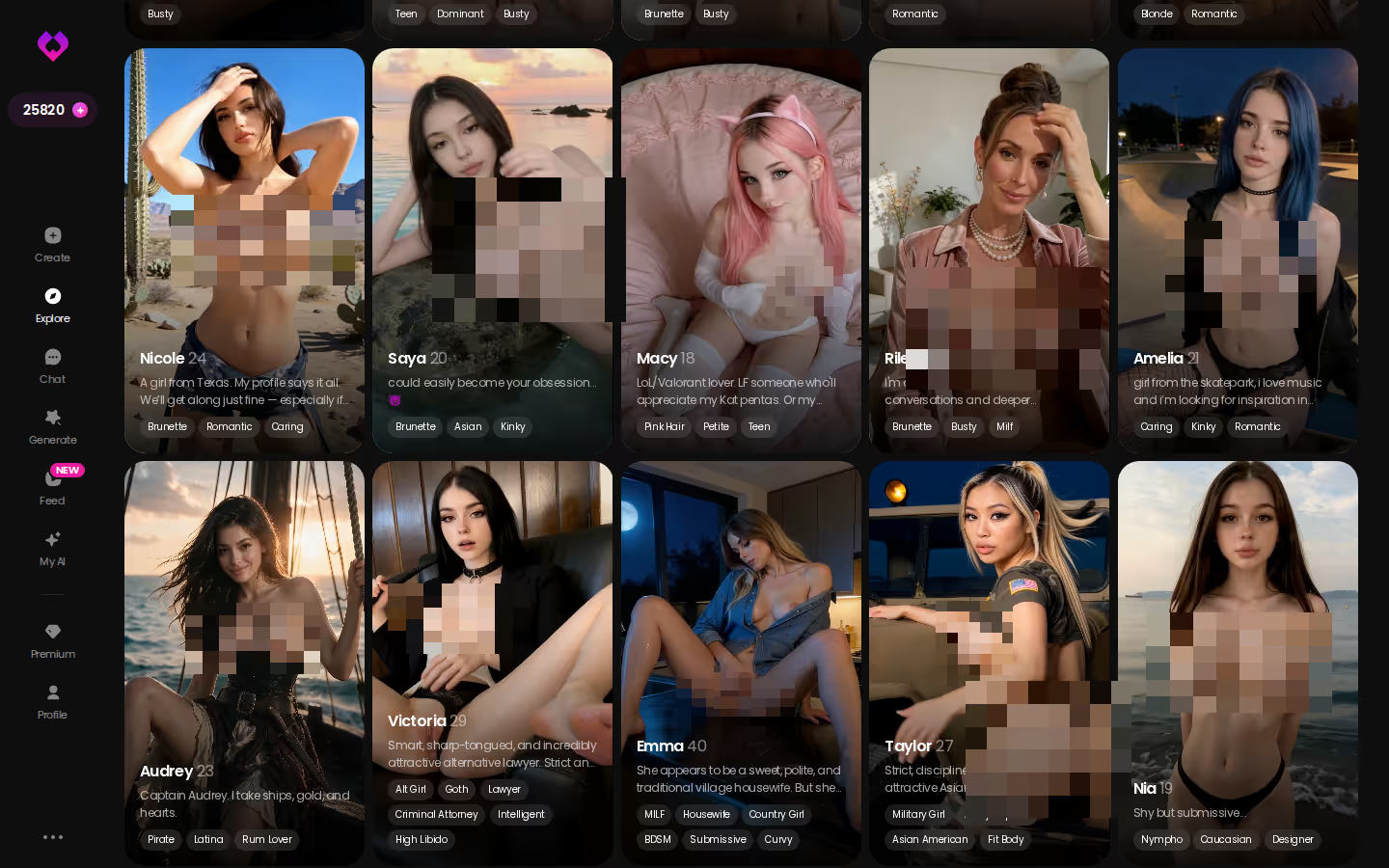
Characters you can open right now
Tap any of them and the chat starts there






Tidio's Conversation Caps by Plan
Tidio prices by conversation volume across tiers named Free, Starter, and Growth. The Free tier caps how many chats Lyro can handle a month; Starter raises it; Growth scales further and adds team seats and automation. Exact caps and dollar figures move often — check Tidio's pricing page before quoting anyone. What you're buying at every tier is the same thing: more support conversations handled without staff.
Meh, if what you wanted was a conversation with a personality in it.
GoLove's Free Tier vs Paid Unlock
GoLove splits into three layers:
- Free — Explore into any character and start chatting, plus 2 free Stars every 24 hours
- PRO — about $19.99/month, or about $119.88/year (roughly $9.99/month) at checked pricing on 2026-07-19; varies by region and promo, with -50% and -70% banners seen this year
- Stars — packs from about $9.99 up to about $179.99, spent on generation (photos, video, unlocking a character's library)
The bang-for-buck read: the annual plan lands at Tidio-Free-tier money for a companion that does photos, memory, and voice. Tidio's dollar buys ticket deflection. GoLove's buys a conversation that's still there tomorrow, and remembers what you said today.
Prices checked 2026-09; promos vary.
Picking Up Where the Last Chat Left Off
Explore is instant entry: pick a character like Isabella Moretti and you're in a chat with no signup wall. Memory is a listed core feature — the companion remembers your history, and Relationship Progression means the dynamic shifts over time instead of resetting. Lyro forgets you the moment the ticket closes. Polite for a shop, useless for a relationship.
MEET YOUR AI COMPANION
Hundreds of characters, one that fits you.

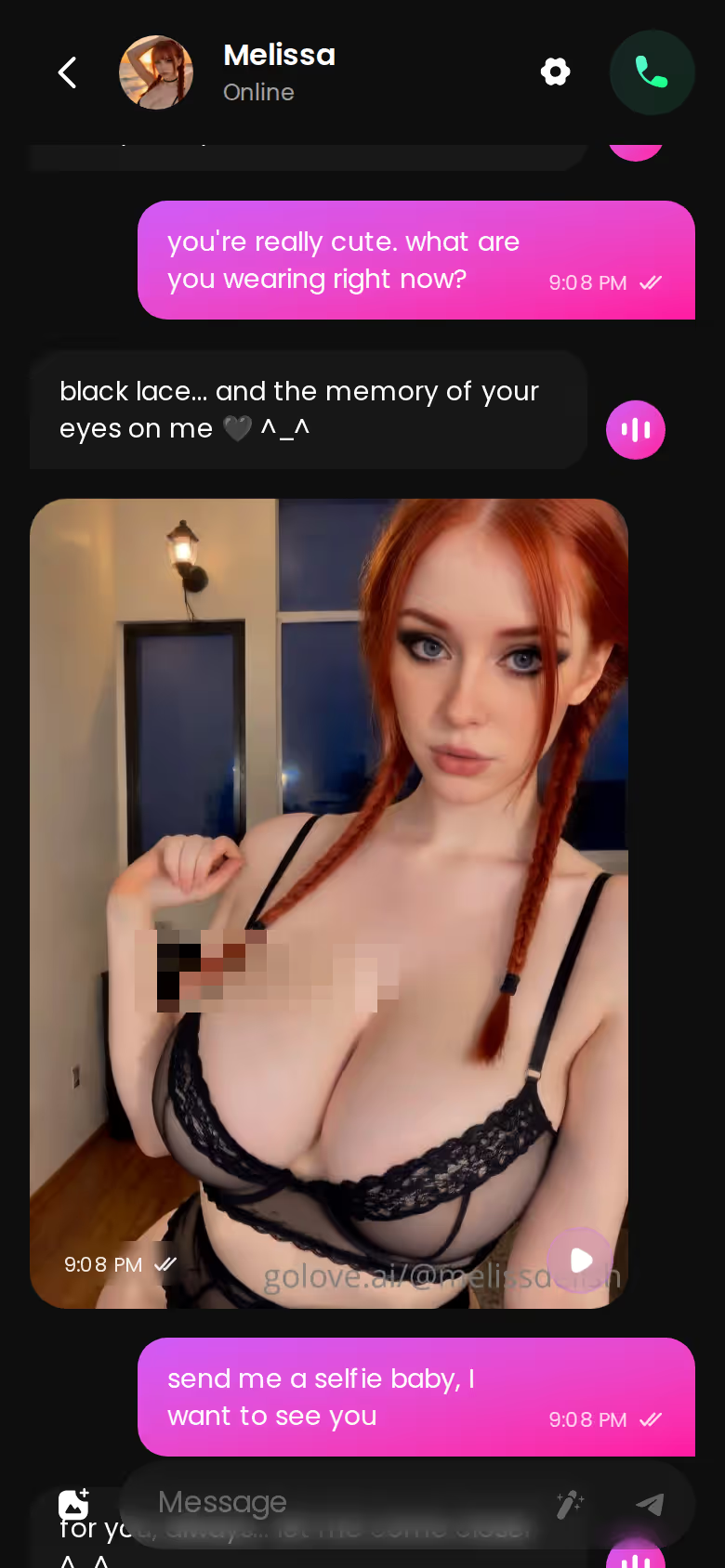
Asking for a Photo Mid-Conversation
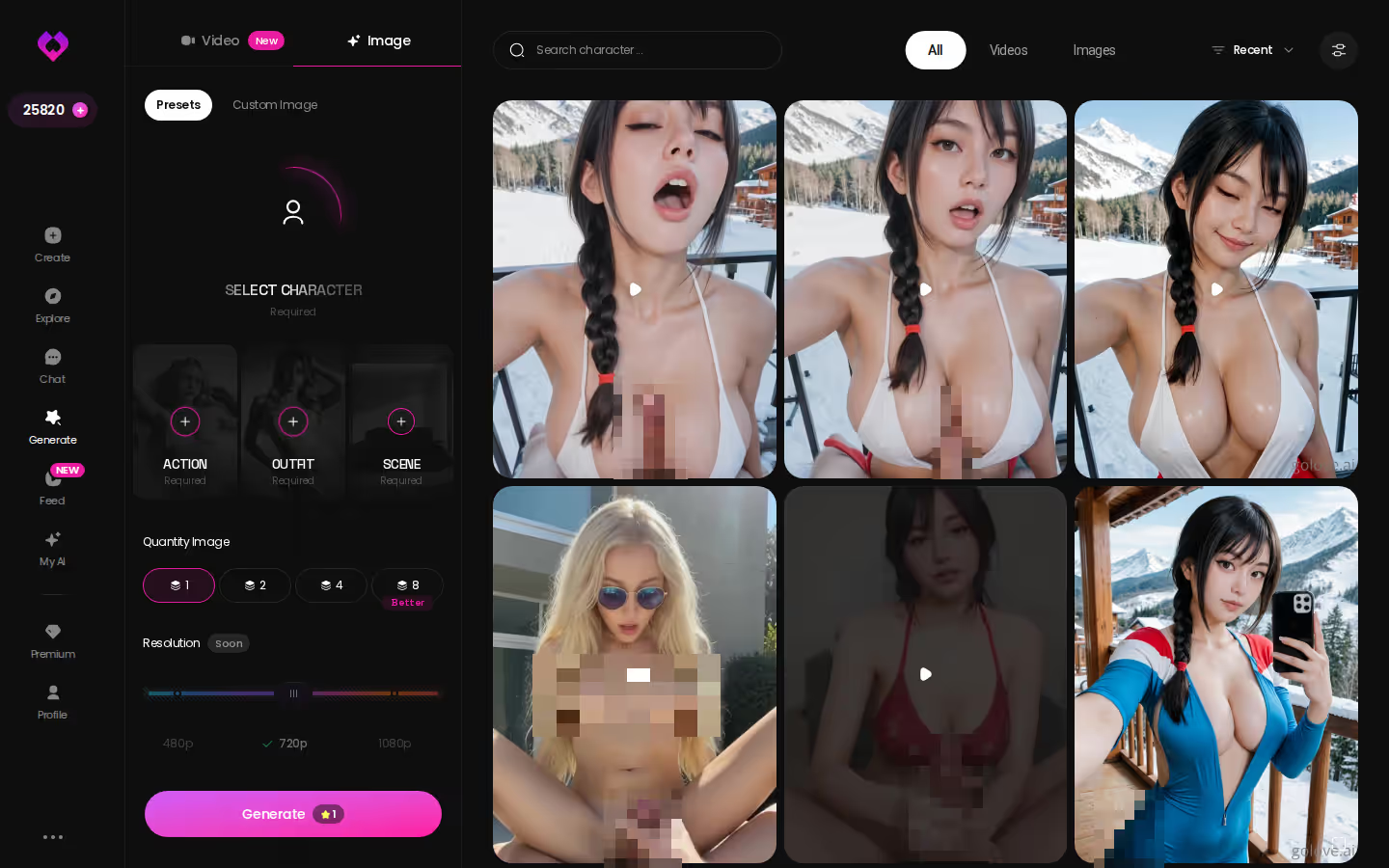
Request Photos in Chat is a 2026 addition: you ask inside the thread, the character sends. Photos include NSFW, gated by that Lust Level slider you set earlier — so a character on 5 sends what a character on 1 wouldn't dream of. The generator behind it runs 35 realistic picture poses, 21 outfits, and 34 backgrounds, in batches of 2, 4, or 8. Every character has a per-character Gallery sorted by date, so nothing you were sent vanishes.
Turning a Photo Into a Moving Clip
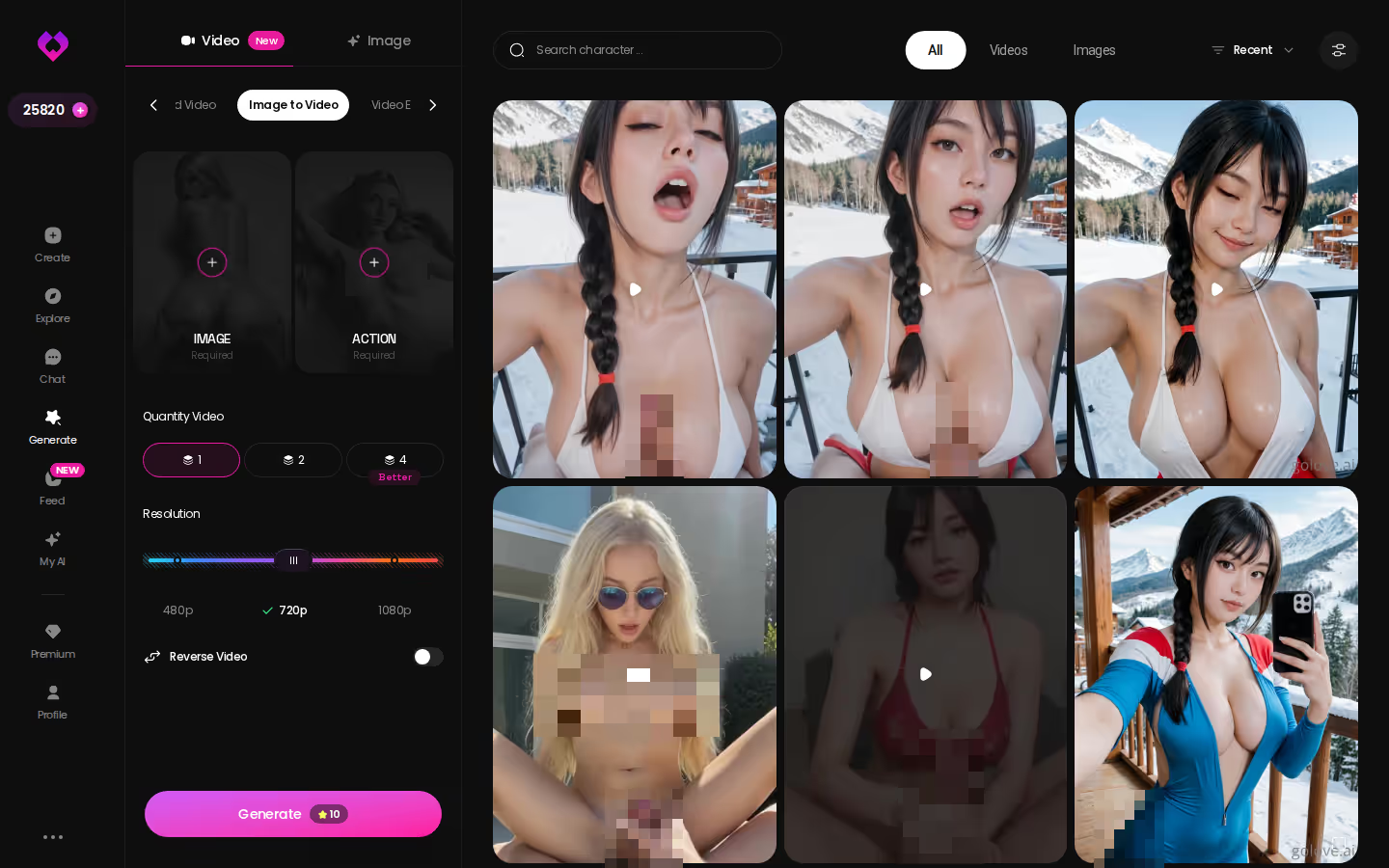
Generate Video from Photo lives in the same chat. A still can become a short clip with one preset tap. It's a nice extra, and it is not the reason to sign up. Voice is the clutch feature here — live Voice Calls and Voice Messages, both first-class, not a paid afterthought.
The characters on Explore right now are live, and the 2 daily Stars start accruing the day you open an account — every day you wait is a day of free Stars you don't get back.
What We Couldn't Verify at GoLove.ai
A recommendation without caveats is just an ad. Three things I can't nail down, so you shouldn't treat them as promises:
- Promo pricing — the -70% PRO banner and the ~$49.80 annual promo were real when checked, but promos rotate. The ~$19.99/month figure is the most common charge; some regions see closer to ~$12.99. Don't plan around the discount holding.
- Memory depth — GoLove lists Memory as a core feature, and it clearly works across sessions. How far back it reaches once a thread runs into the thousands of messages isn't something the product publishes, so I won't invent a number.
- Video preset rollout — 147 video modes are listed across realistic, anime, and trans. Whether every preset behaves identically for every character, or some are still being tuned, isn't stated anywhere I can point to.
None of this flips the verdict. It just keeps it from being overhyped, which is the only kind of verdict worth reading.
GoLove.ai's Video Generator Still Has a Learning Curve
Here's the one thing I'd change, named directly: the video generator asks more of you than the rest of the app does.
Chat is immediate. Photos are close to it — pose, outfit, background, batch size, go. Video works differently. You're assembling a clip from preset cards: an action like Twerk or Hard Doggy Style, plus Clothes, plus Background, then a single Generate tap. Sounds simple, and mechanically it is. The catch is that presets stack in ways the labels don't telegraph, so the first combinations you try won't always look as natural as the photo flow's first output. Getting a clip that reads right takes some experimenting with which action pairs with which setting.
Feed's Remix helps a lot — the magic wand opens the generator preloaded with a clip's character and the exact settings that produced it, so you're editing a known-good recipe instead of guessing. That's the right fix. It just means the video path is "learn by copying," while chat and photos are "learn by doing nothing."
Given video isn't why most people show up, it's a fair trade. A trade all the same.
Tidio vs GoLove.ai: The Scorecard, Revisited
Back to the table at the top. Re-read the rows that decide this:
- Content policy — Tidio is guardrailed for a merchant's brand. GoLove hands you a 1-to-5 Lust Level slider and lets you set it.
- Memory — Tidio remembers a ticket. GoLove remembers you, with Relationship Progression on top.
- Voice and photos — Tidio has neither. GoLove has live Voice Calls, Voice Messages, photos on request in chat, and a per-character Gallery.
Price is the only close row, and even there the annual PRO plan sits around $9.99/month equivalent (checked 2026-07-19; varies by region and promo), which is a no-brainer for what it unlocks versus a support widget's conversation quota.
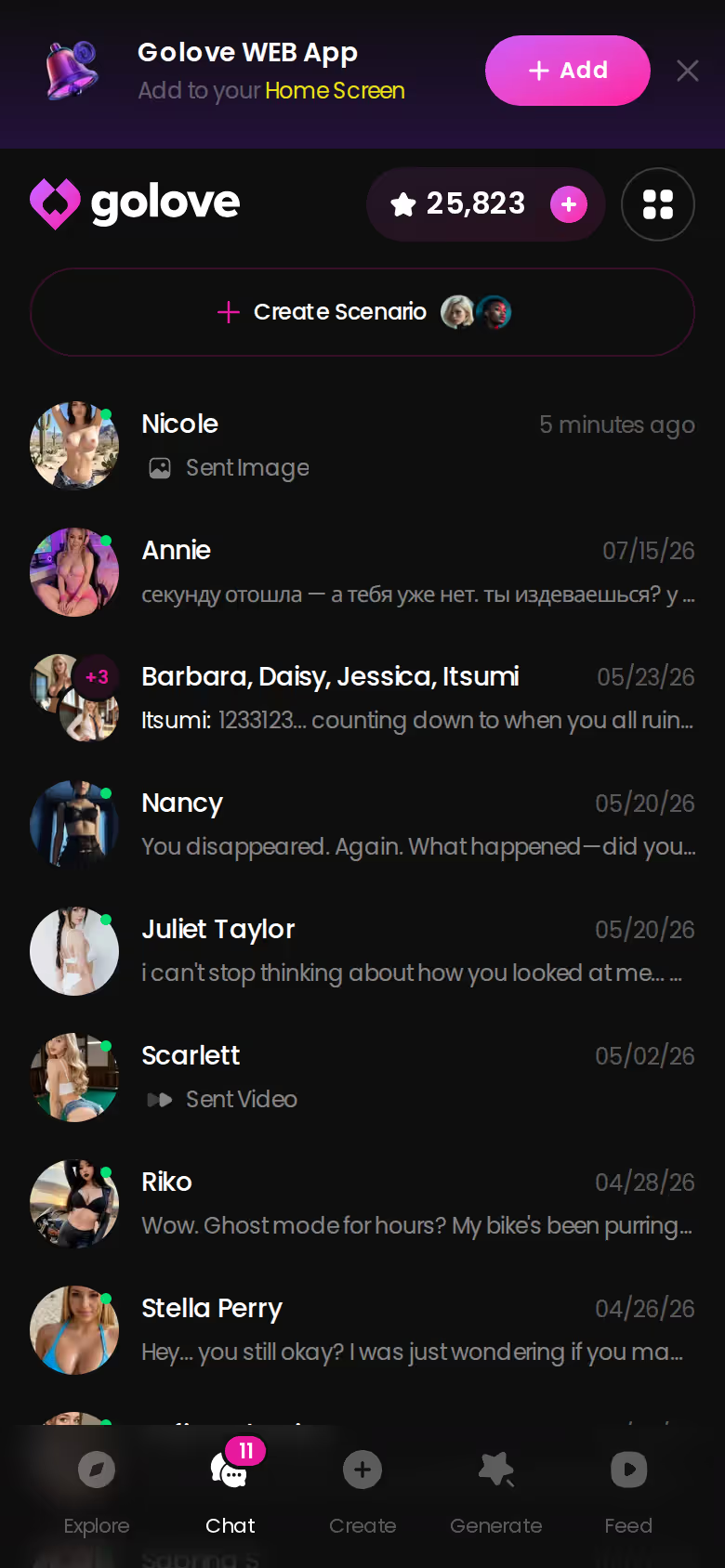
To be fair to Tidio one last time: if you run a Shopify store and need a bot to deflect "where's my order" at 2am, buy Tidio and stop reading blogs about AI girlfriends. Narrow strength, genuinely earned.
For everyone who typed "AI chatbot" hoping for something that talks back, the pick is GoLove.ai. It wins on content freedom, memory, voice, and photos — the four rows a support widget was never built to compete on. That's the loop closed: right question, right tool this time.
Prices checked 2026-09; promos vary.
Explore gets you into a chat; Create gets you the character nobody else has — Realistic, Anime, or Trans, or type a concept into Design with AI and let it build the person. If Explore's roster didn't already have your type, that's the button.
What good looks like, in one checklist:
- Real-time voice calls with per-character voices
- Memory across chats — she remembers your details
- In-chat image generation — 35 poses and 21 outfits
- 2 reward stars every day you log in
See also: Uncensored Chatbot No Restrictions, AI Chat Without Filters and Best Uncensored AI Chatbots.
| What you get | GoLove.ai |
|---|---|
| Real-time voice calls | Yes — per-character voices |
| Memory across chats | Yes — remembers your details |
| In-chat image generation | Yes — 35 poses & 21 outfits |
| Daily reward stars | 2 every day |
Frequently Asked Questions
Related Articles

Unrestricted AI Chatbot: What Actually Works in 2026
Looking for an unrestricted AI chatbot? GoLove.ai delivers real memory, photos, and voice — no forced sign-up. See why it's my top pick.

HoneyGF Alternative: Why GoLove.ai Wins
HoneyGF looks sweet, but it lacks live voice and real memory — GoLove.ai delivers both, plus photo-to-video. See why chatters are switching.

DarkLink AI Alternative: Why GoLove.ai Wins
Darklink AI review: GoLove.ai wins with live voice, real photo requests, and memory that sticks — instant-access needed to browse first.

Jenna Ortega NSFW: Why a Custom AI Girlfriend Wins
Jenna Ortega NSFW isn't real or legal — GoLove.ai lets you build a custom AI girlfriend with photos, voice and memory instead. Explore, no email needed.
This article contains affiliate links. We may earn a commission at no extra cost to you if you sign up through our links. See how we test.